WASTEWATER PLANT
TCEQ says water safe for almost all uses
A public hearing for a proposed wastewater treatment plant planned for Taylor’s extraterritorial jurisdiction drew a crowd of about 50 armed with questions, research and concerns about erosion and pollution.
The Texas Commission on Environmental Quality session held Jan. 12 at the Williamson County Expo Center was the last opportunity for the public to register comments before the state agency considers approving the wastewater permit.
Discharges from the facility are expected to
“ The subsequent continuous flow will make it impossible to control the soil erosion that will occur when the sewage plant is opened.”
— Glenn Harrington contain five-day carbonaceous biochemical oxygen demand, total suspended solids, ammonia nitrogen and E. coli bacteria, plus additional potential pollutants, according to the
application. Despite worries raised by residents, TCEQ said the water would still be safe for all uses except drinking, including swimming, playing, feeding livestock and watering vegetable gardens.
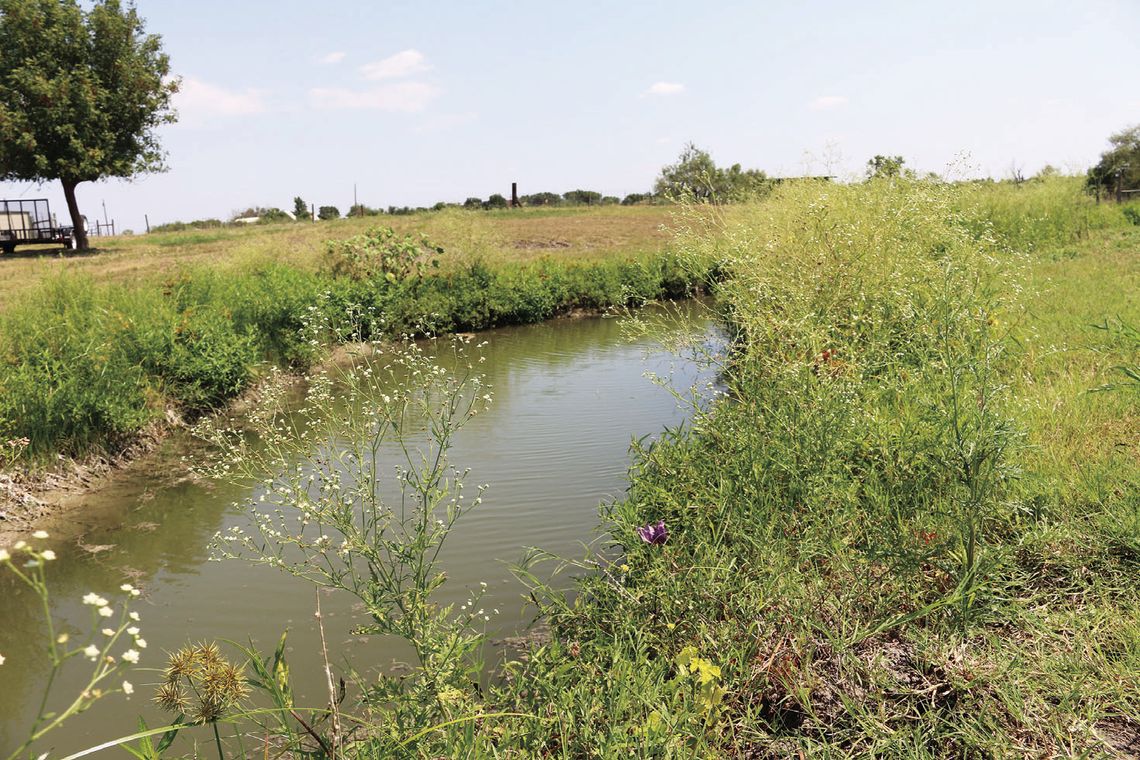
Residents said they are also apprehensive about the effect of erosion as waters rush through normally dry creek beds.
Glen Harrington, whose property includes a small creek designated to carry wastewater, said heavy rains often force him to rebuild the creek banks due to erosion.
“These creeks that only run part of the year are easily maintained. The dumping of 150,000 gallons per day of treated sewage, and the subsequent continuous flow will make it impossible to control the soil erosion that will occur when the sewage plant is opened,” Harrington said.
Jessica Anderson, a TCEQ staff attorney, told attendees TECQ would mail a document answering all official comments from the public hearing within 60 days.
Meanwhile, those potentially affected by the treatment plant who filed comments can request a contested case 30 days after a response is mailed.
The application for a Texas Pollutant Discharge Elimination System permit was submitted in 2024. The development was originally planned to be residential, with 612 homes being built. Since then, the usage has changed to commercial.
TCEQ staff said the permit would not allow the development to discharge water from industrial or data center facilities.
The treatment plant will be about 850 feet northeast of FM 112 at Tucek Road. The wastewater will flow into a small, unnamed stream that travels one mile before meeting with Malish Lake.
After three miles, the flowing effluent meets Mustang Creek which later joins with Brushy Creek.
The unnamed stream is often dry, in some places running only when there is rain. In Texas, waterways which are considered navigable are the property of the state. The law identifies specific non-navigable streams, generally those under 30 feet wide that do not run year-round, as private property.
Luis Ayala, who said his home and business on 112 will be affected by the wastewater runoff, said the privateproperty issue means the commercial development will essentially be dumping wastewater on his land.
TCEQ officials said the Texas Water Code allows them to issue discharge permits for all groundwater sources, navigable or not.
Ayala said the public hearing was no more than a procedural item for TCEQ.
“The proposed discharge is 150,000 gallons per day. This is equivalent to 6,250 gallons per hour, or 104 gallons per minute. Typical household garden-hose flow rates are 5-9 gallons per minute for half-inch hoses,” Ayala said.
The public hearing was requested by state Rep. Caroline Harris Davila, R-Round Rock, and state Sen. Charles Schwertner, R- Georgetown. Katharine Chambers from Harris’ staff attended.
Williamson County Precinct 4 Commissioner Russ Boles and Cyrus Reed, conservation director of the state chapter of the Sierra Club, have also previously contacted TCEQ regarding the application.
Lauren Crone of LJA Engineering attended as the sole representative of the applicant, NMCV Taylor Property Investors LLC.