Community has mixed feelings about new Envision Taylor
EDIE ZUVANICH
Special to the Press
Feedback on a proposed roadmap for Taylor’s future shows residents want to keep a small-town feel, pay reasonable taxes and see crime rates stay low, according to a Monday City Council workshop.
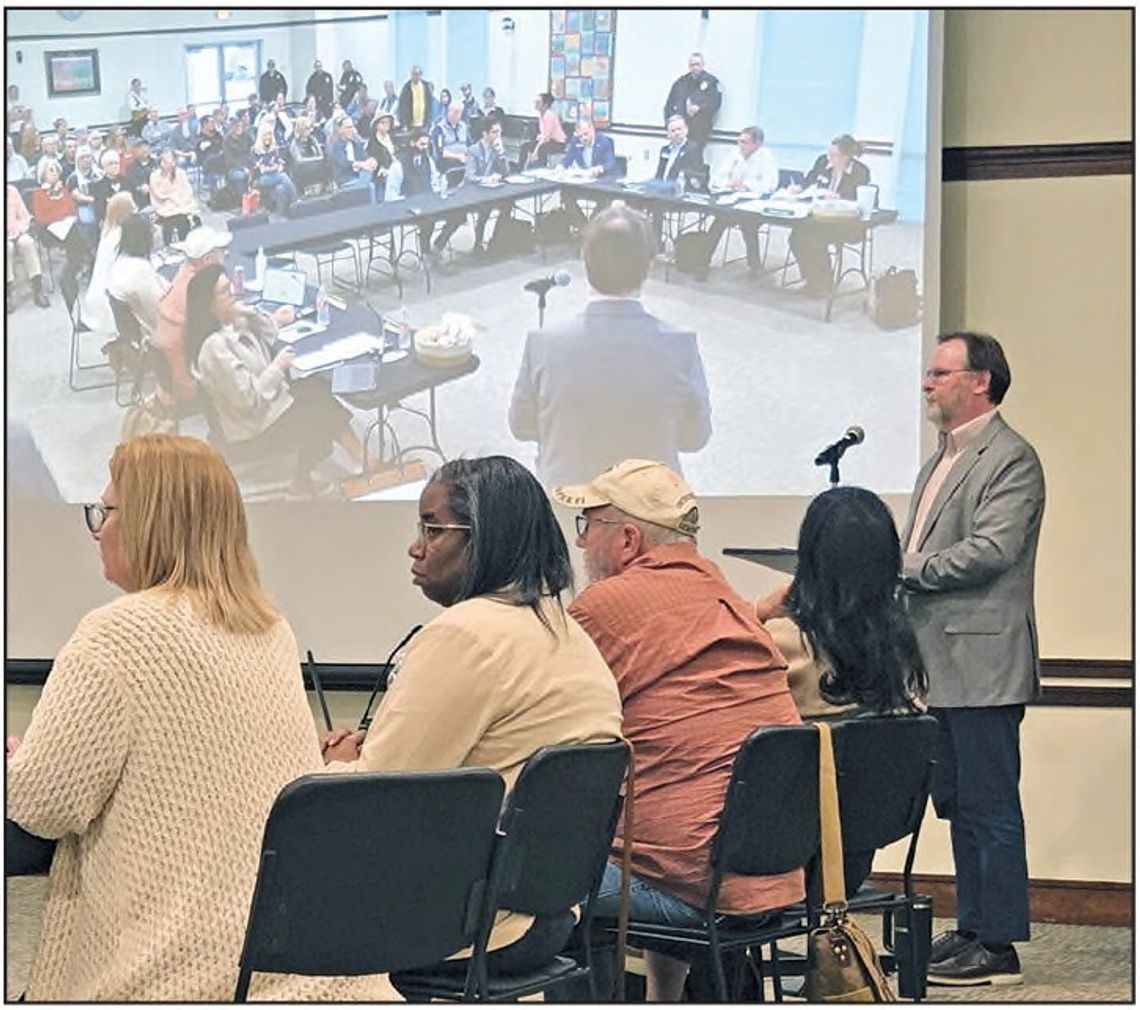
A consultant with Freese & Nichols engineering firm provided an overview of proposed revisions to the Envision Taylor comprehensive plan during the special meeting at the Taylor Public Library with about 70 attendees.
The review drew from 457 mailed responses, 193 online responses, two open houses attended by about 140 people and stakeholder information including input from a council retreat in August.
Mayor Pro Tem Kelly Cmerek told the crowd comprehensive planning should be considered an ongoing process, not a one-time event.
“Some people may perceive this as being an attack on the (city’s) existing code, but that is not what this is. It’s what’s working, what’s not working and what should we change going forward given the growth we have coming,” Cmerek said.
Mayor Dwayne Ariola, who was admitted to the hospital Saturday for undisclosed reasons, did not attend the session and has since been discharged, officials said.
The plan update has met with some resistance from the community, officials acknowledged.
Residents have cited a lack of transparency, fewer community input opportunities and the $133,000 price tag for just phase one of the update as reasons for dissatisfaction. David Jones, project manager for Freese & Nichols, said updates are necessary every few years because even well-structured plans can’t predict legislative changes and unseen conditions.
Jones said many elements of the existing plan still work, but others need refinement due to changes in laws, infrastructure pressure and difficulty of use. He also said the current plan does not adequately account for the “Samsung effect,” referring to the impact of the multibilliondollar Samsung Austin Semiconductor plant in Taylor.
The current Envision Taylor plan was completed just as Samsung made its announcement to locate to the town in November 2021, and minimal changes were made to address the development.
Jones said an updated comprehensive plan could address uses that require a large amount of services such as data centers.
Key responses from the surveys include:
• Keeping the smallcity atmosphere is the top issue that affects whether some residents will decide to remain in Taylor, followed by the level of taxation and a low crime rate.
• About 45% said Taylor is growing too quickly and losing its small-town character.
• More than 71% of the respondents said they want more restaurants, coffee shops and entertainment establishments.
• Homeowners associations and zoning or building codes are seen as the two biggest obstacles to purchasing or renting a new home.
• About 70% of those surveyed said they were able to find housing they could afford in Taylor.
• 81% of respondents would be most interested in buying a singlefamily home if they were in the market for a new place.
• 35% of respondents said they would like to see fewer apartments in Taylor.
• 27% said they would like to see more.
Some community members questioned the validity of sending survey questions to homeowners asking what type of residence they would want to buy.
“It doesn’t make sense to ask the people who already own a home... what kind of housing they would want,” said community advocate Carrie D’Anna. “Because the people who we need to come into the city, the kind of infill we need, the kind of demographic that we need, doesn’t exist here because we don’t have the housing for them. They’re not here to tell you they need the housing.”
Kenneth Flippin, who has a degree in public policy, said it was irresponsible to base a comprehensive plan on so few community-input opportunities. He also questioned the validity of the survey.
“It’s an outcomebased questionnaire. You’re trying to get to an answer,” Flippin said. “Somebody has a vision about Taylor but it’s not the people of Taylor.”
Other community members were happy to see changes to the plan, including a call for mixed housing within a community.
Resident Pam Harper, however, sounded a word of caution about placing multistory townhomes among single-story family homes, causing a loss of privacy in an established neighborhood.
Reading from a statement that included a message of appreciation for the absent Ariola, Harper said the previous council was out of touch with residents when it created the Envision Taylor plan.
“That council had no regard for the citizens of Taylor, except you, Mayor Ariola. You’ve been our warrior and our champion,” Harper said. “We believe in you and we know you will do the right thing when it comes to fixing this horrible mess.”
Harper said people she talks to do not want a walkable city and apartments ruining existing neighborhoods. Instead, they want to see middle-class subdivisions with amenities such as golf courses and swimming pools.
Councilwoman Shelli Cobb said the current code has caused issues with people not being able to use their property in a preferred manner, as land uses changed and some became nonconforming.
She also said the protested development of a data center in a south Taylor neighborhood happened because of key elements in the current plan that needed to be looked at.
“Hopefully we can all work together on making some key changes that will be helpful to everybody,” Cobb said.
A video of the presentation can be viewed at taylortx.new.swagit. com/videos/376054.
“
“Somebody has a vision about Taylor but it’s not the people of Taylor.”
—Kenneth Flippin