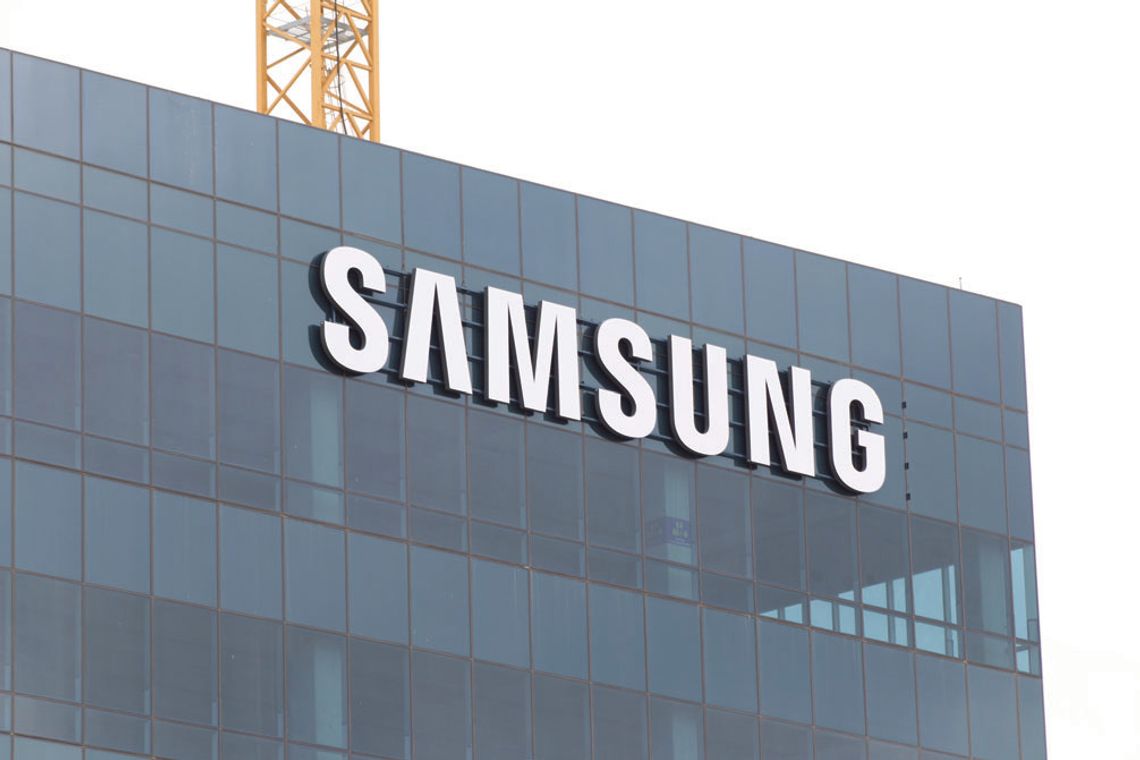
An agreement passed at a late February City Council meeting sets the stage for Samsung Electronics Co. Ltd.’s next chapter in Taylor by bringing another wave of construction jobs and sales-tax revenue.
Listed on the consent agenda, and passed with no fanfare or discussion, the contracts between the city and HDR Engineering are for expedited services on behalf of Taylor for inspection and permitting approvals for Samsung’s $17 billion advanced semiconductor research and manufacturing facility.
Those agreements signal the city is preparing for Samsung’s second massive phase, the planned 2.7 million- square-foot Fab 2 project. When the next project begins, it will bring thousands of construction workers to the area once again.
The first semiconductor fabrication unit is scheduled to be operational by the end of this year to make a new generation of chips for electric vehicle and robotics company Tesla.
While Samsung and the city say there is no set timeline to kick off the second phase, the council actions show Taylor is preparing for first steps to start as early as the end of 2026.
“We do anticipate additional benefits from construction of Fab 2 but we do not budget for any particular estimates,” said Daniel Seguin, a city spokesman and executive director of community services.
In the fall of 2021, Gov. Greg Abbott and Samsung officials announced the tech giant planned to build a foundry in southwest Taylor that could eventually bring up to 1,800 jobs to the area.
From 2022 through 2024, the period when the heaviest construction phases of Samsung’s Taylor foundry and offices took place, sales-tax collections were $25 million more than projected sales-tax growth without the project from the South Korean tech giant.
That’s because an agreement with Samsung meant that all materials for the project purchased offsite paid the state sales-and-use tax locally.
That translated into a windfall for the city, which it used for such projects as the $5.56 million recovery from the 2022 winter storm. It also funded more public works equipment for street maintenance, police and fire department equipment, improvements to parks and the animal shelter, along with meeting the infrastructure and maintenance needs of the cemetery.
A quarter of that was used to offset property-tax rates and the remainder was socked away for future “extraordinary” needs, officials said.
According to the recent annual outside audit of city finances, sales-tax revenue in fiscal 2025, which ended last September, dipped about 55% to $9.4 million from $20.7 million in fiscal 2024. “It seems like a big decrease, but I think everyone is aware that the Samsung manufacturing (facility) boost to your sales tax and that was not a permanent change,” said Mike Brooks, a partner in the city’s auditing firm Brooks, Watson & Co.
While there is anticipation of another sales-tax windfall in the future, the city isn’t counting its chickens before they are hatched.
“Our budgets are solely based on regular recurring revenue,” Seguin said. “Any additional revenue such as this would come before council for use after it has been received.”
Throughout various stages of construction for Samsung’s buildings, roads, parking lots and other infrastructure, around 18,000 construction workers from numerous trades were involved, boosting some local businesses such as restaurants.
Just when work will start on the second fab unit, which has been in the long-term plans since proposed in 2021, will depend on the same market forces that created some of the delays from a planned 2024 opening to late 2026 for the first phase.
The market had softened somewhat as Samsung, major competitor Taiwan Semiconductor Manufacturing Corp. and other companies sought lucrative contracts to justify ramping up to make the next generation of semiconductors that power numerous complex systems including artificial-intelligence applications.
The Tesla contract, which CEO Elon Musk estimates will exceed $16 billion through 2033, was the impetus needed to prepare the Taylor facility for full operation.
The Tesla Gigafactory Texas is in nearby Del Valle.
“While we do not have a specific timeline to build a second fab at this time in Taylor, the City Council was taking proactive steps to ensure they are ready,” said Michele Glaze, Samsung Austin Semiconductor senior director of communications, and expressed appreciation for the city’s partnership.
“At this time, Samsung will remain strategically flexible regarding a timeline based upon market conditions and customer demand,” Glaze said.
The Taylor campus is expected to employ about 1,500 by the end of the year, including some that will transfer from the Austin location.