DELIBERATELY DIVERSE | Frances Sorrow
“Deliberately Diverse” represents the individual thoughts of Taylor friends who never completely agree about anything but enjoy diverse discussions.
For many Jews, Passover is the most enjoyable holiday in our Jewish calendar. In 2026, the holiday runs from Wednesday night, April 1, to sundown on Thursday, April 9.
Why is Passover so memorable?
It celebrates our deliverance from slavery more than 3,300 years ago. The authority for the holiday comes from Chapter 12 of the biblical Book of Exodus. This describes how God passed over Egypt, striking down all the firstborn, except those in dwellings marked with lamb’s blood on the lintels of the door.
Exodus 12:14-15 directs the holiday, saying, “This day shall be for you one of remembrance as a festival to your God throughout the ages; you shall celebrate it as an institution for all time. For seven days you shall eat unleavened bread.”
Surprisingly, the Book of Exodus is not read during the celebration.
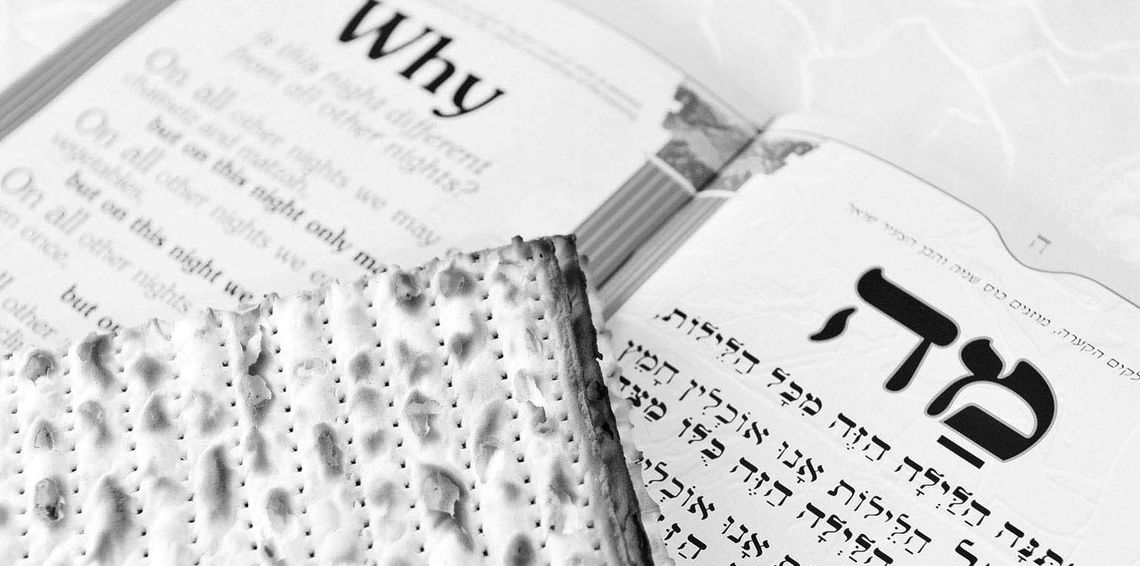
During the festive meal on the first two nights, we read from a book called a Haggadah (plural Haggadot). This means “telling” in Hebrew. It covers the liberation story read during the Seder, the ritual meal. It would seem that every Haggadah would be the same, but that isn’t the case. Some parts are customary.
There is a Seder plate with a roasted shank bone, bitter herbs and spring greens. There is covered matzah, the unleavened bread. Four cups of wine or grape juice will be served during the ceremony. All Haggadot remind us to regard liberation as our own redemption from slavery as the Haggadah says, “If the Lord your God had not brought Israel out from the land of bondage, you, your children and your children’s children might still be enslaved.”
Another standard item is that Moses, the great leader of the Exodus, is rarely mentioned. This is to remind us the true liberator is God. As mentioned above, there isn’t an official Haggadah. In America, there are many hundreds of versions. They not only reflect different congregations from Orthodox to Reform, but different eras, politics and more. And since they are used only two nights a year, many families use old ones for the treasured memories of family Seders. Others get new Haggadot that reflect modern experiences.
In the 1960s, some Haggadot emphasized the plight of Russian Jews. Others supported the Civil Rights movement. There are now feminist versions, Gay Pride versions, and more that address most of the political spectrum. There are even very traditional Haggadot to choose
from. The oldest complete Haggadah was created in Spain around 1350 C.E., while fragmentary ones date from the 10th century, or 900-999 C.E.
Almost all Haggadot end with “next year in Jerusalem.”
Sorrow is a Taylor resident and has been active with the Taylor Conservation and Heritage Society.