OUR TOWN
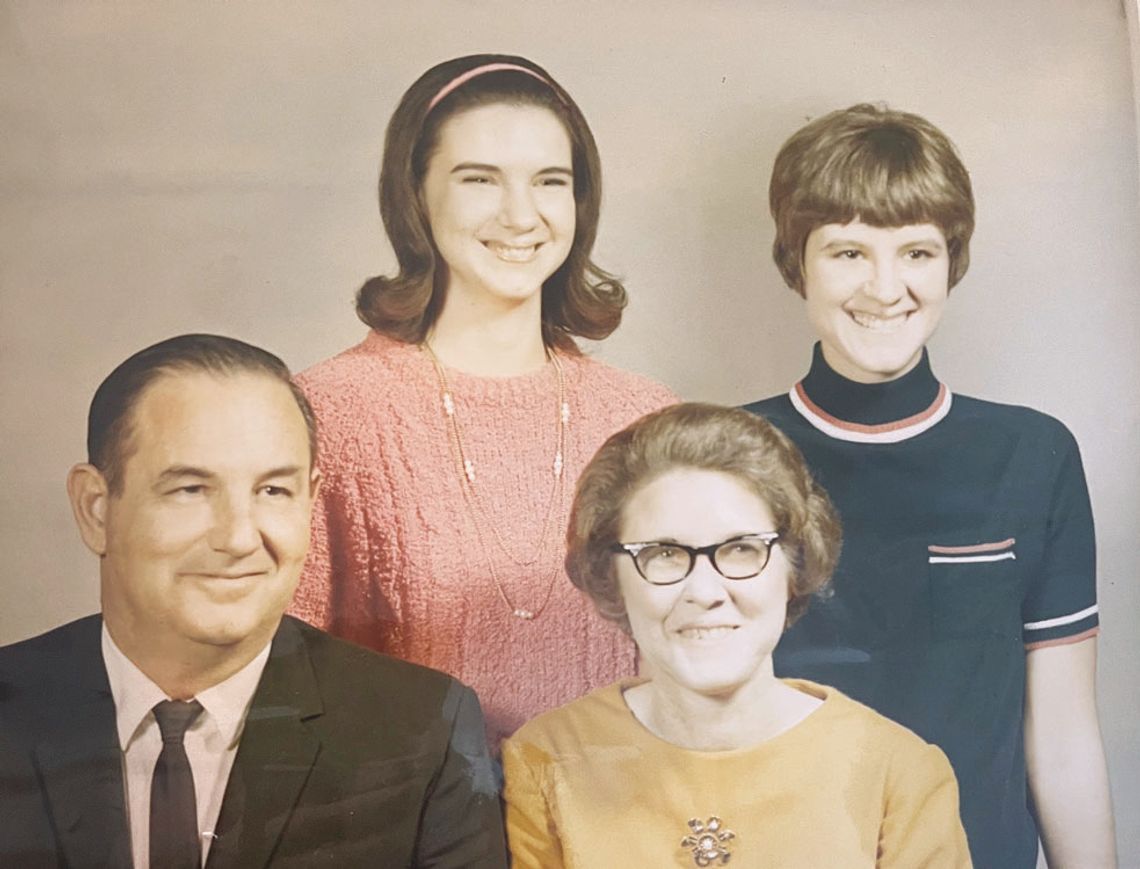
Phillips Worm Farm was a family-owned business on Texas 95 just south of Taylor. Owned and operated by Henry and Olene Phillips and their daughters, Sue and Brenda, the worms lived in peat moss contained in raised beds in a building behind their house.
Keep in mind, we’re talking about hundreds of thousands of worms, and they required the same basic care you would give to any “livestock” raised on a farm.
“They had to be watered and fed every day,” Brenda recalled. “We sprinkled oats all over the top that had been ground into a very fine powder. With that many worms in one place, you could actually hear them smacking as they ate.”
When you have huge numbers of worms eating and drinking daily, you also end up with lots of manure, known officially as worm castings. Over a period of about six months, the level of peat moss would grow about six inches in height from all the poop added by the little wigglers.

“We would pile up the existing dirt in the middle of the bed,” Brenda explained. “Then we would spread fresh peat moss all around it. The worms would crawl out of the pile and into the fresh, clean bedding.”
The discarded worm castings proved to be a very nutrient-rich soil the family sold by the pickup load. Olene eventually opened a second business on the property, The Flower Barn, where she grew incredibly beautiful plants with the plentiful byproduct of worm farming. Totally unrelated to the worm business, she also opened a successful ceramics business on the property.
Henry’s other job involved working for the phone company for a number of years.
My family was friends with the Phillips, and we would visit them on occasion. I remember when Sue and Brenda were in high school, and Sue taught me how to swim in the pool at the old Carlow Motel on Second Street. If you remember the Carlow, then you know the sign for the motel was the inspiration for the sign that now welcomes visitors coming into Taylor from the west on U.S. 79.
While I’ve known for quite some time our two families have been acquainted for at least a couple of generations, I just recently discovered that we are also related. Brenda and Sue’s greatgrandmother and my great-grandfather were brother and sister.
As a young boy, I found the worm business fascinating. I still remember going into the building out back and seeing all those raised beds lined up in rows. At the time, I never thought about having to give all those worms food and water, or fresh bedding, or that lights stayed on around the clock.
“We raised two kinds of worms to sell, the smaller red wigglers and African night crawlers, which were larger,” Brenda said. “The lights were kept on around the clock to keep the night crawlers in their place. If they ever sensed it was dark, they would become more active and leave.”
Phillips Worm Farm began in 1952 and served the needs of area fishing enthusiasts for several decades. They started out raising rabbits with a few worms added to the soil under the cages to help manage the waste. When people started asking to buy the worms to go fishing, and the rabbits failed to show a profit, the family redirected their attention to the worm business instead. The worms reproduced with such frequency the family never needed to restock from outside sources. As demand grew, the business expanded beyond the capacity of the building that had previously been a portable classroom purchased from the Granger Independent School District.
They built a large brush arbor for the red wigglers since those worms didn’t have to have the lights on 24/7.
Henry and Olene often hired high school boys to help with handling the huge bales of peat moss and large quantities of ground oats as well as counting worms and other duties. One of those students was Gerald Welch, Brenda’s future husband.
Brenda recalled how she and Sue separated the big worms from the little ones and counted them out one by one to package for sale. They sold 30 worms for $1 to drive-up customers, and wholesale at $20 for a thousand.
Years later, Brenda and Gerald’s son, Clint, helped care for the worms. At age 6, he planned to take over the family business someday so his grandparents wouldn’t have to work so hard.
On more than one occasion, the family was awakened by a predawn honk from an eager fisherman.
“We’ve had them come too early,” Olene said in a 1990 interview with the Austin American-Statesman.
“We don’t really get mad, but we don’t really appreciate getting up at four or five in the morning.”
Looking back, Brenda said all the responsibilities of working in the family business taught her a good work ethic. She recalls getting paid 10 cents an hour to work with the worms while her friends laboring at local dime stores earned 35 cents an hour. Later, she began working for C. R. Anthony on Main Street for 75 cents an hour.
When asked how she felt about working with worms, Brenda said, “I liked the rabbits better. As a teenage girl, there were times when it was kind of embarrassing. But we had done this since we were little so they weren’t creepy to us.”
Phillips Worm Farm is long gone but continues to be a pleasant memory for their many customers through the years. One of those loyal customers asked to have the sign that stood at the end of their driveway by the highway, and placed it on the side of his barn to remember this part of Taylor’s history.
Join me here in a couple of weeks as we explore another tale from Taylor. Until then, be proud of where you’re from.
Crow is a longtime Taylor resident and retired from the Taylor Independent School District after 40 years of service. For a topic or suggestion, reach out to Crow via jason.chlapek@granite mediapartners.com.