OUR TOWN
In honor of Taylor’s sesquicentennial, we are looking back at the early days of Taylorsville and the people and events that shaped the town we know today as Taylor.
After getting its start in 1876 with the arrival of the International and Great Northern Railroad, the town was first called Taylor Station and then officially, Taylorsville.
Named after Edward Moses Taylor, an official with the railroad, the community immediately began to grow. The first businesses and homes were wooden structures built very quickly and very cheaply.
In a little over a year’s time, a visitor wrote, “Today we see a town of five hundred active, enterprising inhabitants.”
Taylorsville had, he said, “attracted people of means, morality and intelligence.”
By 1878, 1,000 residents called Taylorsville home. There were 32 businesses including hotels, restaurants, saloons, dry goods, hardware and feed yards. The community became a shipping point for cattle, grain and cotton. Williamson County’s newest community was growing and thriving.
Then tragedy struck. A fire in 1878 destroyed a few of the town’s earliest wood-frame structures, but that was minor compared to a blaze the following year in which 29 of 32 businesses were destroyed, changing the face of the city overnight.
While I have read several accounts of this destructive fire that were very informative, the source I found to be the most enlightening was a 1940 interview with an 83-year-old Taylor resident, Mrs. John S. Kritser.
Mrs. Kritser was a lifetime resident of the area and lived in Taylorsville at the time of the fire. She was interviewed by student reporters Bette Schram and Irene Strarup and the following comments were published in the March 8, 1940, issue of the Taylor High School newspaper, The Cotton Boll.

“During the last of February 1879, there was a large fire that swept over all of Taylor, destroying almost everything in its path. It started when a high south wind blew some clothes on a hot stove in a small house behind the Kamp Hotel.”
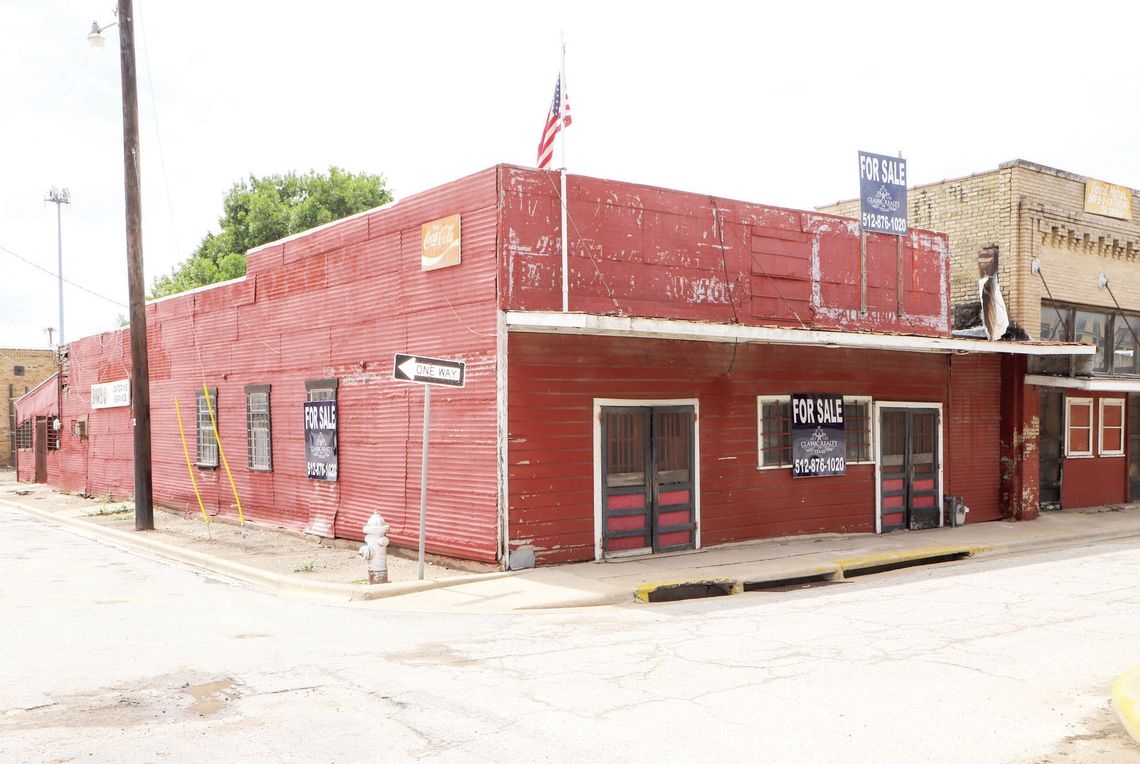
Many current Taylor residents will recognize the red Kamp Hotel building next to the railroad tracks on the corner of East First and North Main streets as the more recent home of Taylor Café, a popular restaurant that barbecue legend, Vencil Mares, opened in 1948. It was one of the few buildings that survived the fire of 1879 and is considered to be one of the oldest buildings in Taylor today.
“Having no water works, we could not stop the fire as it quickly spread from the hotel up the west side of the street to as far as Taylor went in those days. Suddenly the wind changed to the west, blowing the fire to the other side of the street, and upon the arrival of a norther, practically the whole town was burned.”
Something Mrs. Kritser talked about that I haven’t seen anywhere else is how the people of Taylorsville came together to recover and rebuild from the devastating fire. “Long wooden shelters were erected until the homes and stores could be built again and the people whose homes were not damaged by the fire took in the homeless people. We took eighteen people in and beds were put on the floor for everyone.”
Following the fire of 1879, most new buildings were made of brick. The town quickly recovered as indicated in an article from a September 1879 issue of The Taylorsville Times that reported sizable exports of cotton, wool, hides, bones, oats, corn, flour, hogs, sheep, horses and cattle.
One thing I noticed from the Cotton Boll interview is that Mrs. John S. Kritser was only known by her husband’s name. I wanted to know more about this pioneering woman who had lived in the area since before the railroad arrived, so I did a little research.
I learned that Martha Elizabeth Sloan was born in 1858 on the Sloan-Easley property located northwest of Taylor near Jonah. She married John S.
Kritser in 1878, which appears to be the time when she moved inside Taylorsville’s city limits. Their first child died in infancy and was buried in the Sloan-Easley family cemetery near Jonah.
The Kritsers had five other children. Those who remained in Taylor for the rest of their lives are buried in the Taylor City Cemetery along with their parents.
Martha Kritser’s mother’s maiden name was Easley. A few years ago I discovered an interview with Miss Elizabeth Easley, also from the Jonah area, who began teaching elementary school in Taylor in 1892. One of her students was little Dan Moody, the future governor of Texas. I just know Mrs. Kritser and Miss Easley are related, and one of these days I’ll figure out exactly how they are related and add that to this story.
I found a total of two Cotton Boll interviews with this Taylor pioneer published in 1940. This one in March, and another in October with student reporter E. H. Lawhon. Two different interviews, different stories told each time.
Martha Kritser passed away shortly after that in January 1941.
I would have loved to have met Mrs. Kritser. I would have loved to have interviewed her.
Thankfully, student reporters in 1940 took the initiative to learn about their local history and interviewed her while she was still here to tell her story.
I treasure the conversations that I’ve had with some of our local legends. A few were in their 90s at the time of their interviews and one was 100 years old. Videos of some of those interviews are on the Taylor Independent School District YouTube channel at youtube.com/@taylorisd/ featured.
If you are fortunate enough to still have your grandparents or greatgrandparents, or if you know older residents from the community, talk to them while they are still able to tell their stories. You’ll be glad you did.
Join me here in a few weeks as we learn about another story from the Kritser interviews. Until then, be proud of where you’re from.
Crow is a longtime Taylor resident and retired from the Taylor Independent School District after 40 years of service. For a topic or suggestion, reach out to Crow via [email protected].