District touts successful hiring season
HUTTO – A slowdown in enrollment may end up giving the Hutto Independent School District a little breathing room as educators work to relieve some campuses that are already full, trustees heard.
The cost of housing, inflation and other factors are resulting in reduced growth for the district, with fewer incoming kindergartners than previous years, the school board was told during a Sept. 24 session.
In a related matter at the meeting, Hutto ISD officials learned the district has less than a dozen teacher vacancies.
Meanwhile, the discussion about slower enrollment, some campuses at maximum capacity and building new schools to relieve overcrowding took center stage.
“We’re seeing overall the enrollment in public schools in Texas went down for the first time ever. It didn’t grow,” said consultant Paul Cash of Zonda Demographics. “Online schools are growing by 15,000 students a year.”
Cash reported Hutto ISD saw 80 new students this academic cycle, a big change from the 400500 the district enrolled a few years back.
He expects Hutto ISD to grow by an average of 1.5% over the next five years.
The consultant said the reduction in growth means the district will probably not reach the 12,000 student enrollment mark until 2032 rather than 2029 as anticipated.
Current enrollment is 11,162.
More students are graduating and leaving the school system than are entering it as kindergartners, part of the reason for the slower enrollment growth, school board members heard.
“Even though interest rates aren’t going down, prices of homes aren’t going down either,” Cash said. “The reason kindergarten numbers are down is it’s harder for families who have kindergartners to buy a house, and so you aren’t going to have as many.”
He reported home-buying has slowed in Hutto, with 82 fewer homes closed on in June 2026 versus the same month in the previous year.
However, the market is betting on buyers.
Within the school district boundaries, Cash said there are 13,752 lots in some phase of future development. There are also 313 homes currently under construction and 2,182 vacant development lots.
The district has 14 active subdivisions and 15 future subdivisions with over 8,000 housing units planned between them. The largest subdivision currently being built is Flora, which is outside of Hutto and will have 2,803 homes when complete.
It is about 10% finished.
The consultant said new subdivisions are yielding fewer students, about four to five students for every 10 houses. The number varies by area and multifamily housing units have a slightly higher number of students per home.
Meanwhile, the district is building new schools to alleviate existing overcrowding.
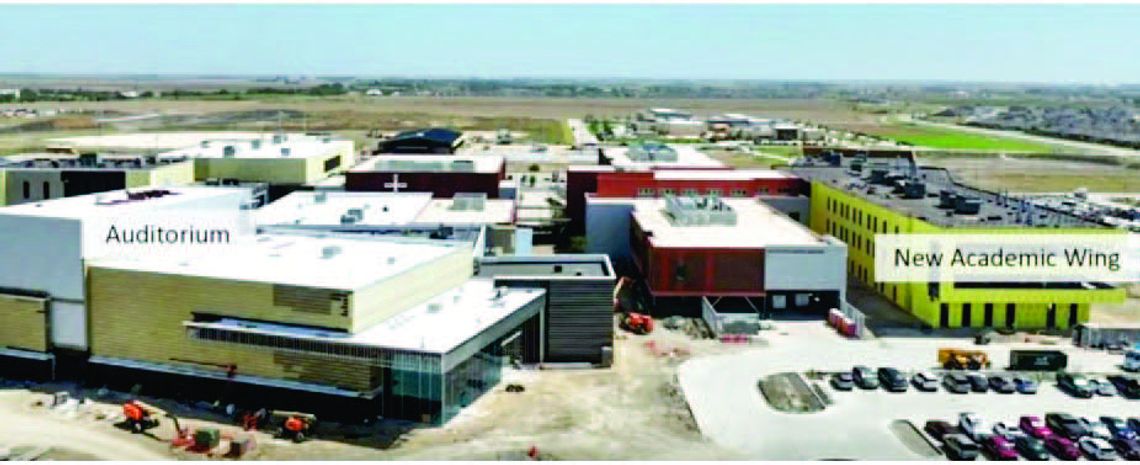
Renovations at Hutto High School are almost complete, with the final touches expected to be done by November, according to Casey Sledge of Sledge Engineering.
The project has spent or committed almost all of its $67 million allocation from the 2023 bond issue.
The Creekside High School project has committed $172 million of the $180 million allotted from bond funds.
Creekside will be Hutto’s second high school and is an expansion of the existing Ninth Grade Center.
The new high school is expected to open for the 2027-28 school year.
Sledge told trustees both high school projects are on schedule and under budget The $522 million bond approved by voters in 2023 also included two new elementary school campuses, improvements to some existing schools, a new bus station and new buses in addition to other infrastructure needs.
Hutto teacher loss rises slightly Despite teacher concerns about how proposed evaluation changes may affect their pay in the future, Hutto ISD is holding steady with only 10 teacher vacancies.
“We had one of the most successful hiring seasons at the campus level due to early recruitment and hiring practices,” said Gaye Rosser, executive director of talent management and personnel support.
She said the district started the year with 12 vacancies versus 15 last year.
Meanwhile, teacher turnover increased to 22.3%, from 17.8% in 2024-25.
Rosser said of 144 exit interviews conducted for staff leaving the district, more than 45% was due to health, family or relocation issues.
Career changes accounted for another 5% and pay issues were cited as the reason for 8% of the departures.